Case study, UAE dental education
From lecture hall to patient chair
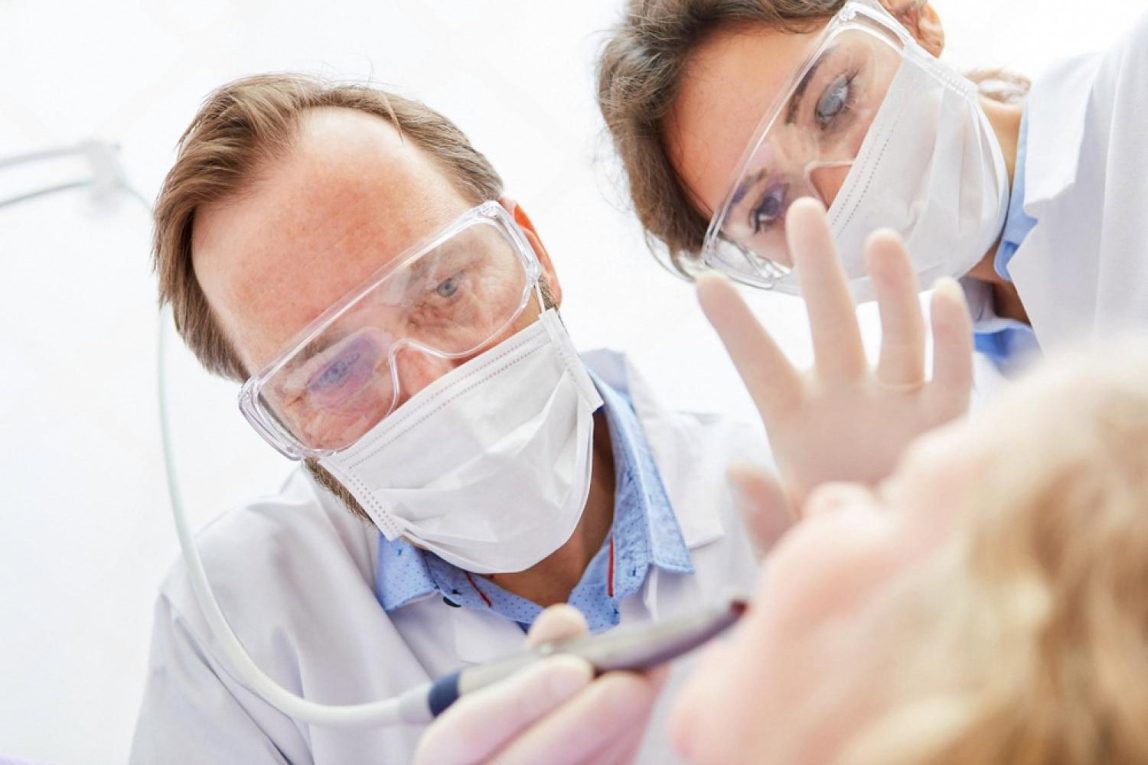
Meet Layla, a fourth-year dental student at a Sharjah university. She had the theory locked down, top marks in oral anatomy, pharmacology, and radiology. Then she sat down for her first supervised cavity preparation on a real patient and her hand shook so badly the mirror kept fogging. Her story is common, and it is exactly why practical training sits at the centre of every serious dental programme in the Emirates.
The transformation, before and after clinical rotations
Year 2 student profile. Confident in written exams. Can name every tooth surface and every nerve branch. Struggles to hold a mirror and probe at the same time without contacting soft tissue. Reads a bitewing radiograph slowly and often misses interproximal caries on the distal of premolars. Freezes when a phantom head simulates a bleeding gingiva.
Year 4 student profile. Places rubber dam in under four minutes. Reads a panoramic radiograph in one pass and flags impacted thirds, apical lesions, and bone loss without prompting. Handles a high-speed handpiece with controlled fulcrum. Talks a nervous patient through anaesthesia in both English and Arabic. Knows when to stop and call the supervisor.
What we tried
Approaches that only got students halfway
UAE faculties have experimented with plenty of teaching formats over the last decade, and not all of them moved the needle on clinical skill. The pattern is consistent: anything that keeps the student passive builds knowledge but not competence.
- Lecture-heavy semesters. Students could recite the ADA classification of caries but could not identify a Class II lesion on a real molar under operating light.
- Video-only demonstrations. Watching a root canal on screen is not the same as feeling the give of a file inside a curved canal. Muscle memory does not transfer through a monitor.
- Group phantom-head sessions with one instructor per twenty students. Feedback arrived too late, and errors calcified into habits before anyone corrected them.
- Written-only assessment of radiograph interpretation. Passing the exam did not mean the student could actually spot a periapical radiolucency on a fresh film in clinic.
The gap between knowing and doing kept showing up in the same places: fine motor control, instrument handling, live radiograph reading, and patient communication under pressure.
What worked
The practical model that produced confident graduates
The programmes with the strongest clinical outcomes in the Emirates share a specific structure. It starts early, it is graded, and it puts the student in front of a real handpiece long before graduation. Well-run dental internships for undergraduates in the UAE follow this same shape almost step for step.
- Phantom-head lab from year two. Two to three sessions a week on typodont teeth, with instructors correcting hand posture, fulcrum, and bur angulation in real time.
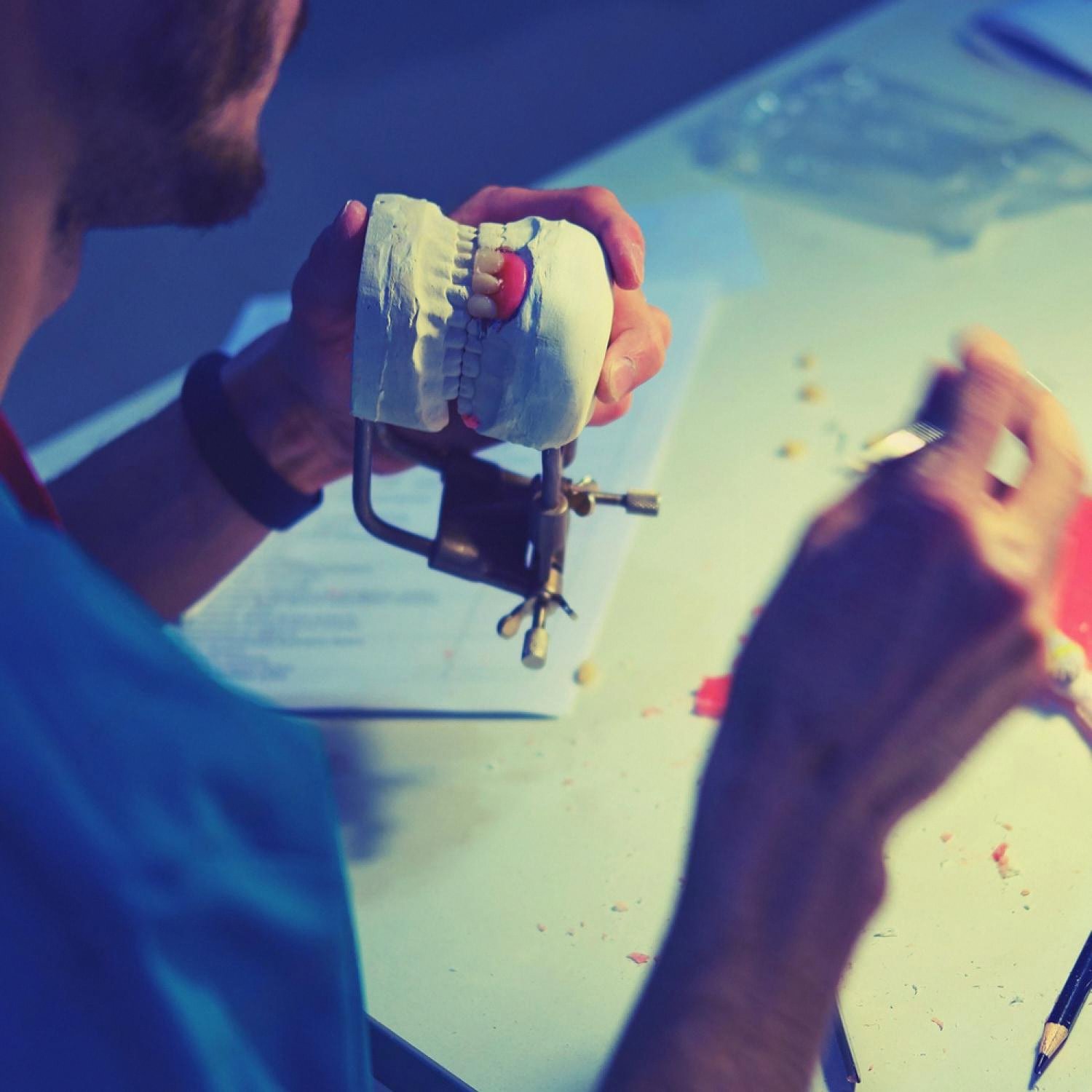
- Fine-motor drills separate from clinical simulation. Wax carving, suture practice on silicone pads, and cross-cut preparations on extracted teeth to build tactile control before any patient contact.
- Instrument identification under time pressure. Students name and pass over a hundred hand and rotary instruments blindfolded or by touch alone, which is how it works in a real surgery.
- Radiograph reading rounds. Weekly sessions where residents present live cases and students call out findings on periapicals, bitewings, panoramics, and CBCT slices, with correct interpretation confirmed on the spot.
- Graded patient exposure. Observation first, then assisting, then supervised simple procedures like scaling and single-surface restorations, before progressing to endodontics, extractions, and prosthetics.
- Bilingual patient communication training. Given the UAE patient mix, students rehearse consent and post-op instructions in English and Arabic, and often Hindi or Urdu too.
Why manual skill is non-negotiable in dentistry
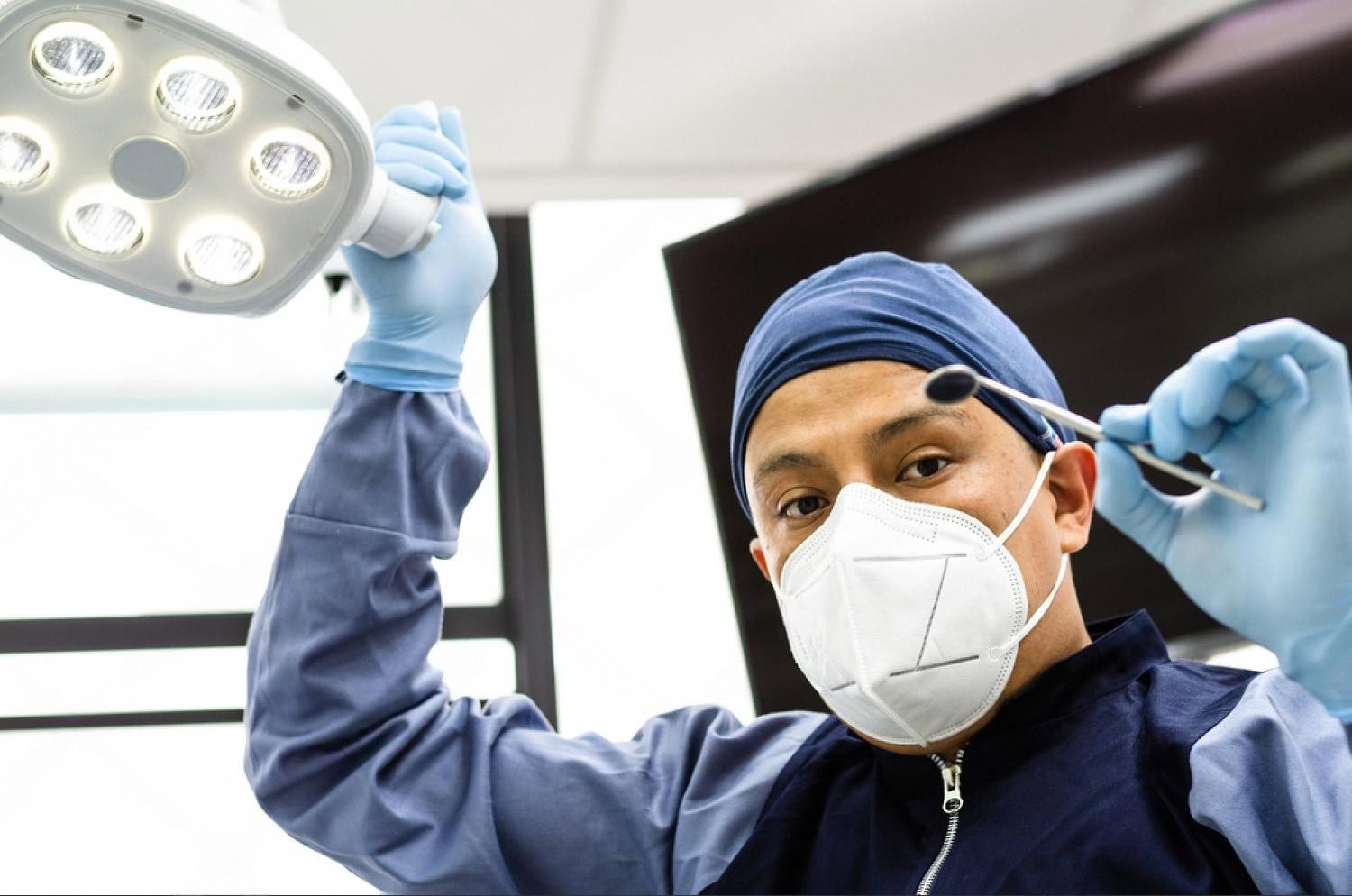
Dentistry is one of the few branches of medicine where the practitioner spends most of the working day performing millimetre-scale manual work under magnification, inside a small, wet, moving space. A general dental workday runs six to eight hours of continuous fine-motor activity, and studies of occupational strain among dentists consistently point to posture and hand control as the two biggest determinants of long-term career health. See the overview on dentistry as a clinical discipline for a broader picture of what the day actually involves.
You cannot build that kind of control from a textbook. You build it by handling instruments thousands of times, correctly, with someone experienced watching and correcting.
Reading the invisible: radiographs and diagnostics
A large slice of a dentist’s work is diagnosing what the eye cannot see. Interproximal caries, periapical infections, root fractures, impacted teeth, cyst formation, bone loss around implants: all of it lives on the radiograph, and misreading it costs the patient a tooth or worse. Practical training in the UAE increasingly includes cone-beam computed tomography interpretation alongside standard 2D films, because CBCT is now standard equipment in most private clinics in Dubai and Abu Dhabi.
Students who only read films during exams tend to freeze in clinic. Students who read one or two live cases every week for two years develop the pattern recognition that lets them scan an image in seconds and know where to look closer.
The single strongest predictor we have seen for a dental graduate performing well in their first job is not their GPA. It is the number of supervised patient procedures they completed before graduation. Everything else follows from that.
What a strong practical year looks like in numbers
The best UAE undergraduate internships give a final-year student direct chairside time with real patients under licensed supervision, typically inside a university clinic or an affiliated hospital. Structured programmes usually cover rotations across restorative dentistry, endodontics, periodontics, oral surgery, prosthodontics, paediatric dentistry, and orthodontics, with logged case counts required in each before sign-off.
The point of logging is not bureaucracy. It is to make sure no student graduates having done ten fillings and zero extractions, or the reverse. Breadth matters as much as depth in the first years of practice.
Frequently asked questions
When do dental students in the UAE start practical training?
Most UAE dental programmes introduce phantom-head lab work from the second year, once students have completed the core science subjects. Real patient contact, first as observers and assistants, typically begins in year three, and independent supervised procedures start in year four and continue through the internship year.
What is the difference between simulation training and a clinical internship?
Simulation training uses mannequins, typodont teeth, and extracted natural teeth to build technique in a risk-free environment. A clinical internship places the student in front of real patients under a licensed supervisor, where they manage consent, take radiographs, perform treatment, and handle unexpected findings. Both are necessary. Simulation alone does not produce a clinic-ready graduate.
Are dental internships mandatory to practice in the UAE?
Yes. To be licensed as a dentist in the UAE, graduates must complete a supervised internship year after their Bachelor of Dental Surgery, and pass the relevant licensing examination through the health authority in the emirate where they intend to work, such as the DHA, DoH, or MOHAP. The internship logbook and case counts are reviewed as part of licensing.
How important is radiograph reading in undergraduate training?
Very important. A significant share of clinical errors in early-career dentistry trace back to misread or unread radiographs. Serious programmes build weekly radiograph interpretation sessions across periapicals, bitewings, panoramics, and CBCT scans, and require students to justify treatment plans against the imaging in front of them.
Can international dental graduates do practical training in the UAE?
International graduates can apply for supervised training positions and residencies in the UAE, but they must meet the credentialing requirements of the local health authority first, including verification of their primary dental degree, English or Arabic language competence, and in most cases a licensing exam. Practical training slots at university-affiliated clinics are competitive.
What manual skills should a dental student prioritise before clinic?
Fulcrum control with hand instruments, controlled use of the high-speed and low-speed handpiece, rubber dam placement, suturing, and precise carving on wax or extracted teeth. These are the foundations. Every clinical procedure, from a simple filling to a complex extraction, depends on them.

Skydiver, maker, audiophile, Vignelli fan and TDC honorary member. Working at the nexus of simplicity and mathematics to craft experiences both online and in real life. I sometimes make random things with friends.